A new Clinical Strategy sets out a shared plan for improving health and care across Birmingham, the Black Country and Solihull for the next four years.
Many of our communities face significant health challenges, including high levels of deprivation, poorer life expectancy, more long-term conditions, and major inequalities linked to where people live, their ethnicity and their wider life circumstances.
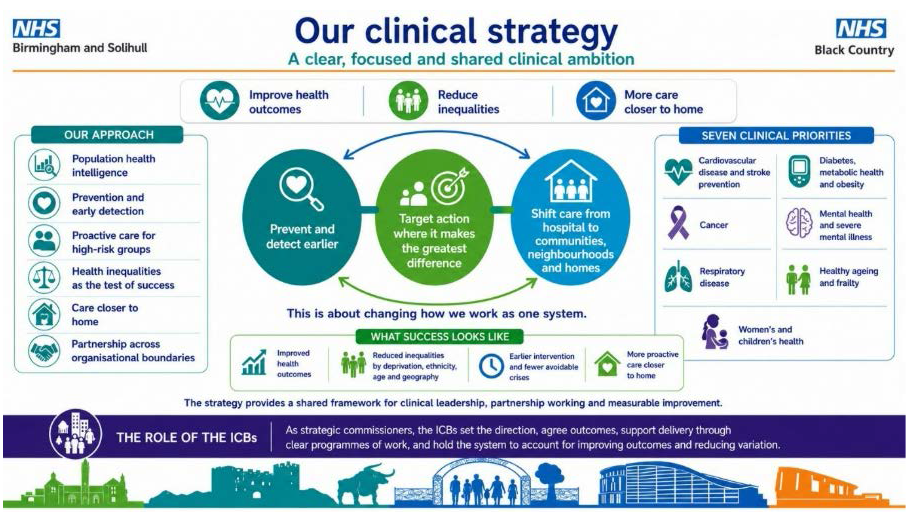
The strategy recognises that we cannot keep doing things in the same way. Too many people become seriously unwell before they get the support they need, and too much care still happens in hospital when people could be better supported closer to home. The aim is to prevent illness earlier, improve outcomes, reduce inequalities and build a more joined-up system around people and communities.
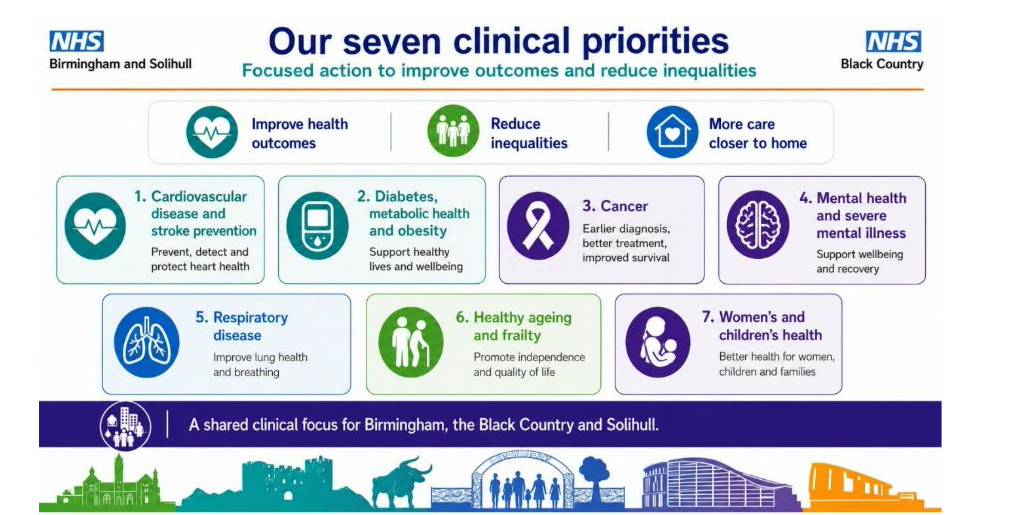
The strategy focuses on seven clinical priorities where targeted action can make the biggest difference:
- Cardiovascular disease and stroke prevention - we will do more to find and treat high blood pressure, irregular heart rhythm and high cholesterol earlier, particularly in communities at higher risk. The aim is to prevent avoidable heart attacks and strokes.
- Diabetes, metabolic health and obesity - we will focus on preventing Type 2 diabetes where possible, detecting it earlier, improving care for people already living with diabetes, and reducing serious complications such as kidney disease, sight loss and amputations.
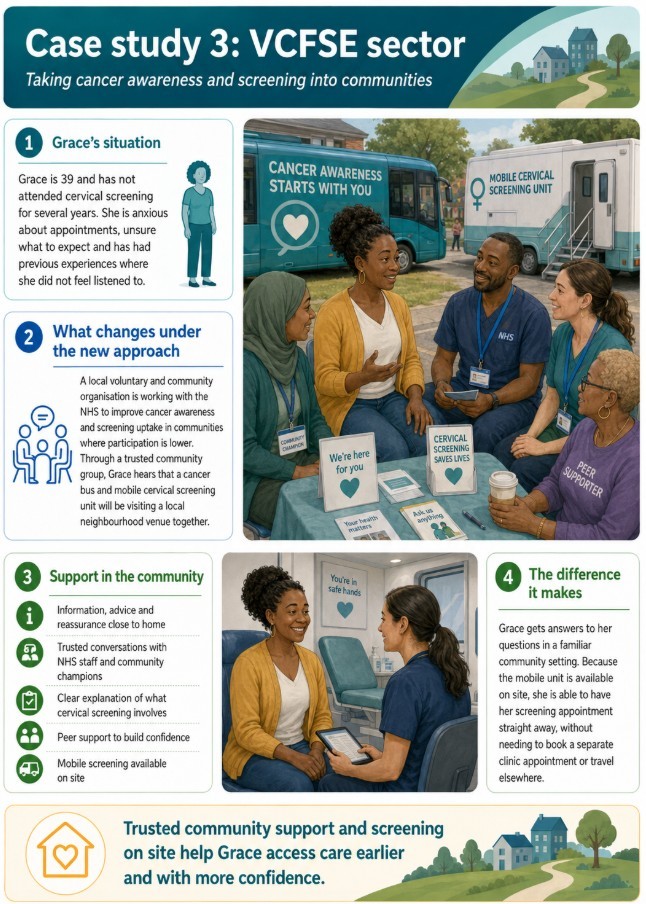
- Cancer: earlier diagnosis and fair access - we will work to increase cancer screening uptake, support earlier diagnosis, reduce emergency cancer presentations, and make sure communities with poorer outcomes are not left behind.
- Mental health and severe mental illness - we will improve access to mental health support, strengthen community alternatives to crisis care and hospital admission, and make sure people with severe mental illness receive better physical health checks and support.
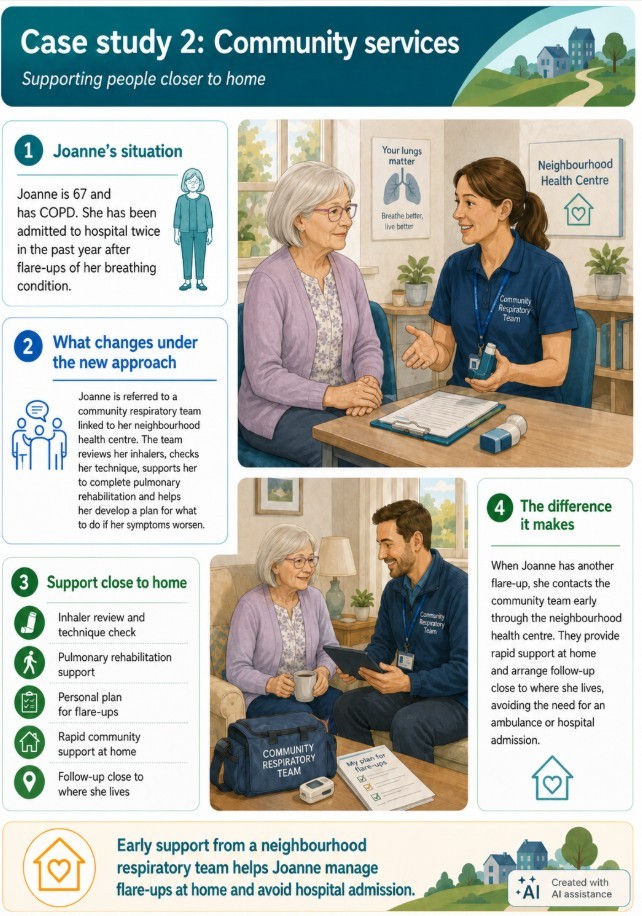
- Respiratory disease, including COPD, asthma and TB - we will identify more people with undiagnosed lung disease, improve community respiratory care, increase access to pulmonary rehabilitation, and support more people to stop smoking.
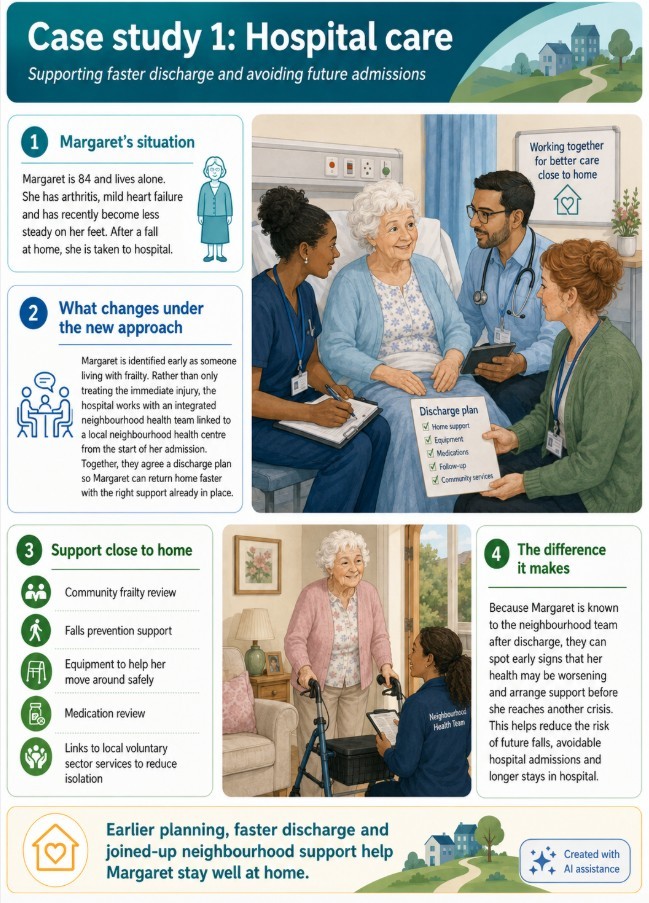
- Healthy ageing, frailty and multiple long-term conditions - we will identify frailty earlier, provide more proactive care planning, reduce hospital admissions and harm, and support older people to live well and independently for longer.
- Women’s and children’s health - we will improve maternity and neonatal outcomes, reduce inequalities in care for Black and Asian women, strengthen perinatal mental health support, improve children’s health, and expand access to women’s health services across the life course.
Across all seven priorities, the strategy is clear that health inequalities must be central. Population health data and community insights will be used to understand where the greatest needs are, target action more effectively, and track progress by deprivation, ethnicity, age and geography.
The strategy also emphasises the importance of prevention, early detection, personalised care, digital tools, strong clinical leadership and partnership working. The NHS cannot deliver this alone. Local authorities, primary care, hospitals, mental health and community services, the voluntary sector, patients, families and communities all have a role to play.
Delivery will be overseen through a Joint Clinical Strategy Board, with specific clinical programme groups for each priority area. These groups will be responsible for turning the strategy into practical action, agreeing clear measures of success and reporting progress.
In 2026/2027, the system will test how care can shift closer to people’s homes and communities, particularly for people with frailty, women and babies, people at the end of life, and those with severe mental illness.
What is the Clinical Strategy?
The Clinical Strategy sets out a shared clinical ambition for Birmingham, the Black Country and Solihull. It focuses on improving health outcomes, reducing inequalities and supporting more care closer to people’s homes and communities.
Why do we need a Clinical Strategy?
People across Birmingham, the Black Country and Solihull face significant health challenges, including high levels of deprivation, long-term conditions, avoidable illness, late diagnosis and gaps in healthy life expectancy. The strategy provides a clear framework for focusing collective action on the areas where it can make the biggest difference.
What are the seven clinical priorities?
The seven clinical priorities are:
- Cardiovascular disease and stroke prevention
- Diabetes, metabolic health and obesity
- Cancer
- Mental health and severe mental illness
- Respiratory disease
- Healthy ageing and frailty
- Women’s and children’s health
Why have these priorities been chosen?
They have been chosen because they reflect some of the greatest areas of population need across Birmingham, the Black Country and Solihull. Focused action in these areas has the potential to improve outcomes, reduce inequalities and prevent more avoidable illness, crisis and hospital admission.
Is this about reducing hospital services?
No. The strategy is not about removing hospital care where it is needed. Hospitals will continue to play a vital role. The strategy is about supporting more people earlier, preventing illness where possible and providing more joined-up care closer to home, so fewer people reach crisis point or need avoidable hospital admission.
What does this mean for patients and local people?
For local people, the strategy means a stronger focus on preventing illness, spotting problems earlier and supporting people before they become more unwell. It also means working towards more joined-up care in communities, neighbourhoods and people’s homes, particularly for those most at risk or living with complex needs.
What are neighbourhood health centres?
Neighbourhood health centres are intended to bring services and teams together more locally, helping people access more joined-up support closer to home. They will be important in supporting prevention, proactive care, faster hospital discharge and avoiding unnecessary hospital admissions where safe and appropriate. Work is underway to identify where these centres will be located Birmingham, the Black Country and Solihull.
How will the strategy help reduce health inequalities?
Health inequalities are a central test of success. Progress will be measured not only across the whole population, but by looking at differences linked to deprivation, ethnicity, age and geography. This will help identify where outcomes are not improving equally and where more targeted action is needed.
What role will prevention play?
Prevention is central to the strategy. This means identifying risk earlier, supporting people before conditions become more serious, increasing screening and early diagnosis, and helping people manage long-term conditions more proactively.
How will the strategy affect primary care?
Primary care will be central to delivery. General practice, PCNs, community pharmacy, dentistry and optometry all have an important role in prevention, early detection, long-term condition management and neighbourhood working. The strategy will support more joined-up working between primary care, community services, hospitals, mental health services, local authorities and the voluntary, community, faith and social enterprise sector.
What role will hospitals and NHS providers play?
NHS providers will be key delivery partners. Hospitals, mental health, community and ambulance providers will all have a role in delivering the seven priorities, improving pathways, supporting faster discharge, reducing avoidable admissions and working with neighbourhood teams to provide more joined-up care.
What role will local authorities and the voluntary, community, faith and social enterprise (VCFSE) sector play?
Many of the factors that affect health sit outside the NHS, including housing, employment, education, environment and social connection. Local authorities and the voluntary, community, faith and social enterprise sector will be essential partners in prevention, reducing inequalities and supporting people in their communities.
What does this mean for ICB staff?
For ICB staff, the strategy provides a shared framework for strategic commissioning, clinical leadership, partnership working and measurable improvement. It will help teams focus on agreed priorities, align programmes of work and hold the system to account for improving outcomes and reducing variation.
How will progress be measured?
Progress will be measured through clear outcome measures linked to each clinical priority. These will include measures of prevention, early diagnosis, access, quality, safety, patient experience and outcomes. Measures will also be reviewed by deprivation, ethnicity, age and geography to understand whether inequalities are reducing.
Is this a Birmingham, the Black Country and Solihull-wide strategy?
Yes. The strategy sets out a shared clinical ambition for Birmingham, the Black Country and Solihull, while recognising that delivery will need to reflect local population need and place-based priorities.
How will the strategy be delivered?
Delivery will take place through clear programmes of work, clinical leadership, neighbourhood health, partnership with providers and local authorities, and ongoing engagement with patients, communities and the voluntary sector. The ICBs’ role as strategic commissioners is to set the direction, agree outcomes and hold the system to account.
How will people and communities be involved?
Patients, service users, carers, families and communities will continue to be important in shaping how the strategy is implemented. Their insight will help ensure services are designed around people’s needs and that practical barriers to access are understood and addressed.